
Should You Renovate an Old House or Rebuild It in Varanasi?
Buying a plot is the first big step towards building your dream home. However, choosing the right location is only part of the decision. You also need to check the land records, plot dimensions, road access, drainage, and building rules before making a payment.
A plot may look perfect during a site visit, but hidden issues can affect your house design, construction budget, or approval process later.
So, what are the most important things to check before buying a plot in Varanasi?
In this guide, we explain the key checks you should complete before purchasing land for house construction. We also explain when to consult a property lawyer, an architect, and other qualified professionals.
Before buying a plot, make sure you understand who owns it and whether the seller has the legal right to sell it.
Start by collecting the available property documents. Then ask a qualified property lawyer to review them.
Depending on the property and its history, the lawyer may need to examine:
The exact documents required depend on the type of land, its ownership history, and the applicable rules.
A seller may have possession of a plot without having a clear or transferable title. There may also be disputes, claims from other owners, restrictions on transfer, or unpaid dues.
Therefore, do not rely only on photocopies, verbal promises, or the seller’s assurances.
Ask a qualified property lawyer to verify the title and relevant records before you commit to the purchase. An architect can help assess whether the plot suits your proposed house, but architectural advice does not replace legal title verification.
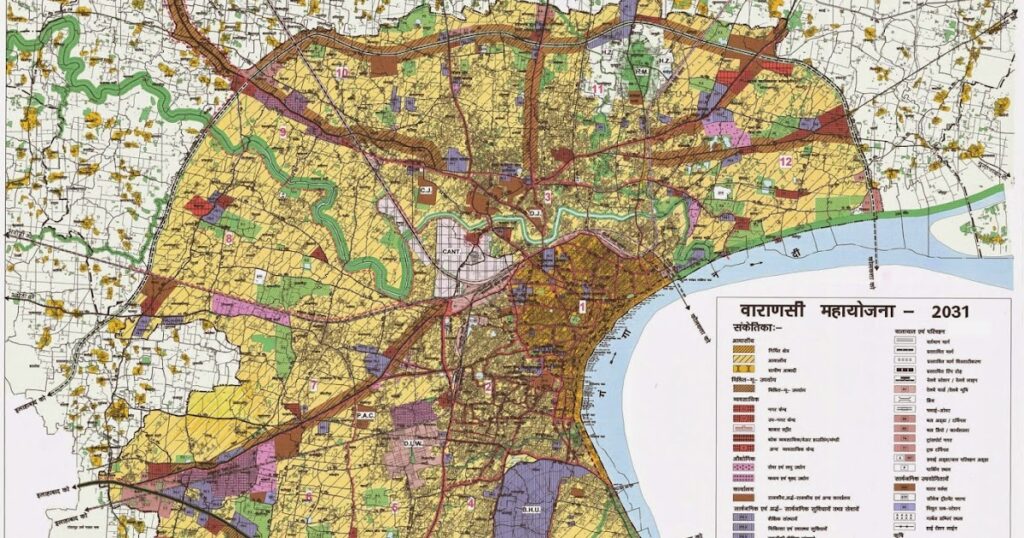
A plot’s location and price may seem attractive, but you should also check whether the land can legally be used for your intended house.
In and around Varanasi, the relevant authority and approval process depend on the property’s location and legal status.
If the plot forms part of a plotted development or colony, ask for the approved layout plan and related approval documents.
Compare the approved plan with the actual site. Check whether the plot number, dimensions, roads, and access points match the records.
Also, confirm whether the plot falls within the approved layout and whether any conditions or restrictions apply.
Not every piece of land is automatically suitable for residential construction. The land may fall under a particular land-use category or have restrictions that affect your plans.
Before buying, confirm:
The correct process depends on the plot’s location and circumstances. Confirm the details with the relevant authority instead of assuming that a nearby house guarantees permission for your plot.
Building bye-laws can affect the area you can build, the number of floors, the building height, and the space you must leave around the house.
Read our guide to VDA building bye-laws to understand the planning considerations you should investigate.
You can also review our guide to documents required for VDA map approval in Varanasi to learn about the documents that may be needed when seeking building-plan approval.
Road access affects more than your daily commute. It can also influence house design, construction logistics, and the ease of bringing materials to the site.
During your visit, check the road that leads directly to the plot.
A narrow lane may make material delivery, waste removal, and construction work more difficult. As a result, the project may require additional planning or cost.
Also, do not assume that the width of the existing road alone determines the building permissions available to you. The applicable rules and the property’s approved status also matter.
A plot’s total area does not tell you everything about its usefulness. Its shape, frontage, depth, and boundary position can affect the house you can design.
For example, two plots with the same area may offer very different options if one has a wide frontage and the other is long and narrow.
Check the following details before finalising the purchase:
Where needed, arrange a survey by a qualified land surveyor and compare the measurements with the relevant documents.
A narrow plot may limit parking, staircase placement, room sizes, and window positions. Similarly, an irregular plot may create areas that are difficult to use.
An architect can study the dimensions and help you understand whether your proposed layout is practical.
For this reason, consider your intended house plan before buying. A little planning at this stage can help prevent costly design changes later.
Drainage problems can affect the comfort, maintenance, and long-term condition of your house.
A plot that looks dry on a sunny day may still experience waterlogging during heavy rain. Therefore, inspect the surroundings as well as the land itself.
During your visit, check for:
If possible, speak with neighbours about conditions during the monsoon. Their experience can help you understand problems that may not be visible during your visit.
Compare the plot’s level with the adjoining road, neighbouring plots, and available drainage outlets.
A plot that sits below the road may need a carefully planned ground level and drainage system. However, simply raising the ground is not always the right solution because it can affect adjoining properties and drainage paths.
An architect or relevant technical professional can assess the site levels and identify design considerations before construction begins.
Find out where rainwater and wastewater can legally drain. Do not assume that a nearby open drain can automatically accept discharge from your property.
Proper drainage planning can help reduce water entry, dampness, and future maintenance problems.
Before purchasing the plot, find out which basic services are available and what it may cost to connect them.
Check:
Also, ask whether any connection charges, infrastructure work, or permissions may apply.
A plot without nearby services may still be suitable for your house. However, you should understand the additional work and cost before deciding.
One of the most important things to check before buying a plot in Varanasi is how much of it you can actually use for your house.
The plot’s total area is not always the same as the permitted building footprint.
Building rules may require open spaces around the building. These spaces can affect the placement of rooms, windows, parking, and stairs.
For example, a plot measuring 30 feet by 40 feet has a total area of 1,200 square feet. However, you should not assume that all 1,200 square feet can be covered by the ground-floor building.
The actual permitted area depends on the applicable rules, road conditions, plot dimensions, land use, and other factors.
If you plan to build a two-storey or three-storey house, verify the applicable height limits and other requirements before buying the plot.
The same applies if you want to include parking, a rental unit, or a future floor extension.
An architect can study the plot dimensions, access, orientation, and planning rules to help you understand the likely design options.
This is not a substitute for official approval, but it can help you identify potential limitations before you invest.
The plot’s orientation and surroundings can affect natural light, ventilation, privacy, and indoor comfort.
During the site visit, look at the direction of the road, the position of neighbouring buildings, and the areas that receive sunlight.
Check whether nearby buildings block daylight or limit airflow. Also, consider where you may be able to place windows, balconies, and open spaces.
The best orientation depends on the plot, surrounding buildings, local climate, and your intended layout. Avoid choosing a plot based only on a general claim that one direction is always best.
Look at the height and position of nearby buildings. Also, consider whether vacant adjoining plots may be developed in the future.
You cannot predict every future change, but understanding the current surroundings can help you make a more informed decision.
The purchase price is only one part of your total home-building budget. You should also estimate the cost of preparing the land and constructing the house.
For example, a low-priced plot may require expensive drainage work, access improvements, or site preparation. A slightly more expensive plot may be easier and less costly to develop.
Therefore, compare the overall cost of buying and building, not just the price per square foot of land.
You can begin planning with our Varanasi cost estimator. Use it as an initial guide and obtain a project-specific estimate once you know more about the plot and your proposed house.
Different professionals answer different questions. Using the right expert for each check can help you avoid mistakes.
|
Professional |
What they can help check |
|
Property lawyer |
Ownership title, document history, claims, restrictions, and legal risks |
|
Architect |
Plot suitability, layout options, planning constraints, and potential house design |
|
Land surveyor |
Plot dimensions, boundaries, and site measurements |
|
Structural or civil engineer |
Relevant technical conditions, site levels, and construction considerations |
|
Relevant local authority |
Applicable land use, approved layouts, building rules, and permission requirements |
The exact professionals you need depend on the plot and the proposed project.
Remember: An architect’s site assessment does not prove legal ownership. Likewise, a clear title does not guarantee that every proposed building design will receive approval. Check both legal and architectural suitability before proceeding.
Use this checklist during your property search.
Completing these checks before purchase can help you make a better decision and reduce the chance of unexpected problems during construction.
Choosing a suitable plot is an important part of planning your future home. Beyond its location and price, you need to understand whether the land can support your preferred design and what challenges you may face during construction.
Anup Architect & Associates can help you review architectural considerations, study plot dimensions, explore suitable layouts, and understand planning requirements for your proposed house.
Our team can also help you plan the next steps towards architectural design and building-plan preparation, depending on your property’s location and requirements.
For legal ownership and title verification, consult a qualified property lawyer. For official land-use and approval information, confirm the details with the relevant authority.
Planning to buy a plot in Varanasi?
Before you finalise your purchase, gather the plot dimensions, available documents, site photographs, and your preferred house requirements. These details can help start a more focused architectural discussion.
Start with legal title verification, approved layout and land use, plot dimensions, road access, drainage, building rules, and the total cost of preparing the site. An architect can help assess design suitability, while a property lawyer should review the legal documents.
Collect the available sale deeds, ownership records, revenue records, mutation details, and other relevant documents. Then ask a qualified property lawyer to check the ownership history and investigate potential legal risks. The exact checks depend on the property.
Ask for the relevant approved layout and land-use documents. Confirm the property’s status with the authority responsible for that location. Do not assume that a residential-looking colony or nearby house proves that the plot has the required approvals.
Poor drainage can lead to waterlogging, dampness, and extra site-preparation costs. Check the road and plot levels, nearby drains, and the area’s history of flooding, especially during the monsoon.
An architect can review the dimensions and applicable planning rules to estimate possible design options. However, the final permitted area depends on the rules and conditions that apply to the property, along with any required approvals.
Soil conditions can affect foundation design and construction costs. Depending on the site and the proposed building, a qualified technical professional may recommend a soil investigation before finalising the design.
First, establish the plot dimensions, access, site levels, drainage arrangements, available services, and applicable building rules. Then develop an initial design and prepare an estimate based on the proposed construction, materials, and finishes.
Do not rely on a single document alone. A property lawyer should review the ownership history, relevant land records, possible claims, restrictions, and other legal issues before you proceed.
Buying the right plot can make the entire house-building process easier. However, a good location and an attractive price are not enough on their own.
Before you buy, verify the legal title, approved layout, permitted land use, road access, dimensions, drainage, services, and building rules. Also, consider the likely cost of preparing the site and constructing your planned house.
Most importantly, involve a property lawyer in legal checks and an architect in assessing design suitability. A few careful checks before purchase can help you avoid costly surprises later.
Ready to explore your house design options? Start with the Varanasi cost estimator and review our architecture services to plan your next steps.
WhatsApp Us